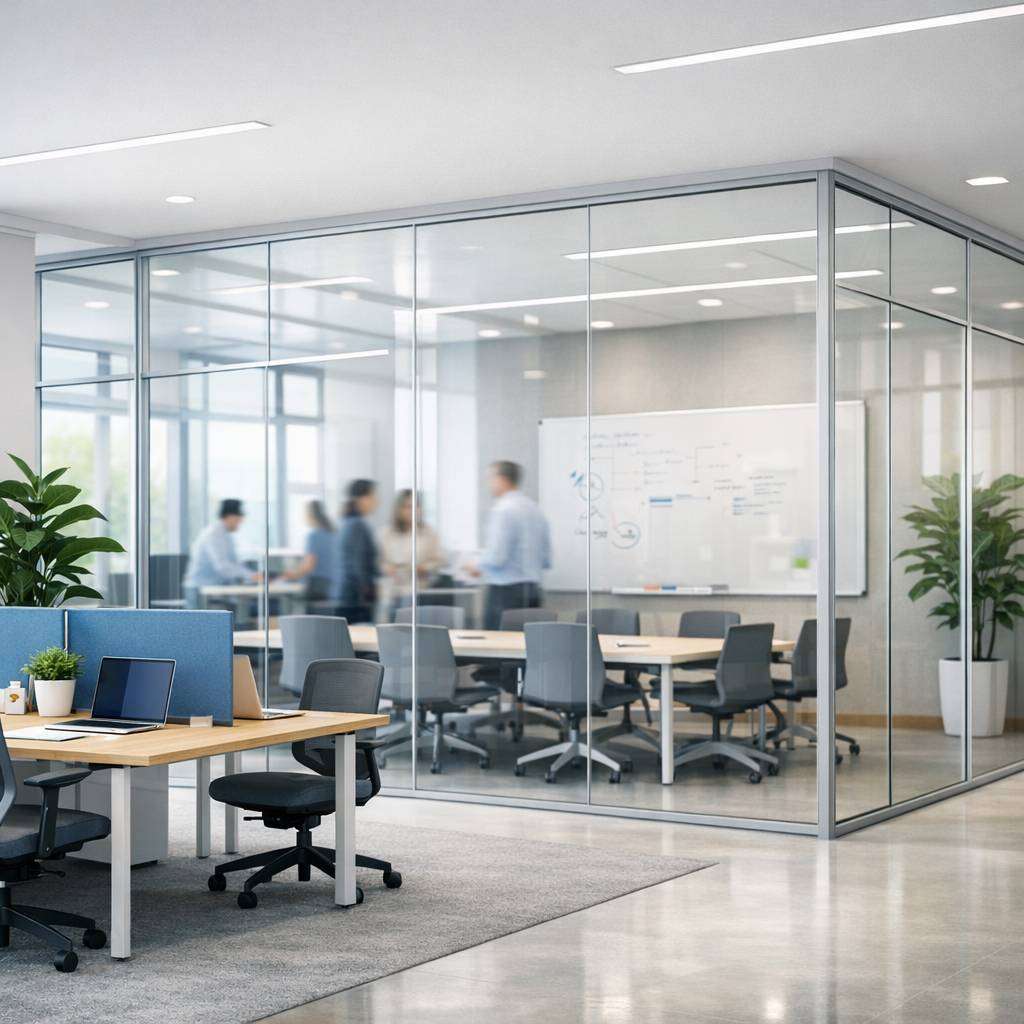
Glass walls have transformed contemporary workplaces by combining aesthetic appeal with practical performance. As organisations seek brighter, more collaborative environments, the use of glass partitions for offices has become a hallmark of modern design. They offer clarity, light transmission, and a sense of openness while preserving function and privacy where needed. This article, written from an expert perspective, examines the key advantages, considerations, and cost implications of glass wall solutions in today’s offices.
In many sectors, the visual and acoustic balance achieved with glass wall solutions supports both individual concentration and team collaboration. By enabling natural light to permeate deeper into workspace, glass walls contribute to a healthier and more engaging environment. The following sections explore how glass partition walls with glass can meet diverse business needs, from meeting room enclosures to open-plan zones.
Glass partition wall
Glass partition walls are a versatile tool in office interiors. They delineate space without creating a closed-off feel, enabling sightlines that maintain a sense of openness. Modern systems are available in a range of thicknesses, coatings, and hardware finishes, allowing organisations to tailor the look to their brand and culture. Key benefits include:
- Enhanced natural light distribution, which reduces the need for artificial lighting and can improve productivity.
- A perception of greater space, critical in smaller offices or dense urban locations.
- Flexible design options, including frameless, semi-framed, and fully framed configurations to complement various architectural styles.
- Improved client and supplier perceptions, as glass communicates transparency and professionalism.
When selecting a glass partition wall, considerations should include acoustic performance, privacy level via frosted or etched finishes, and the ease of access through glass walls in office with doors that integrate robust hardware and glazing.
Glass wall solutions
Glass wall solutions encompass a broad spectrum of configurations, from slimline, high-performance systems to privacy-oriented arrangements. A well-engineered solution will balance light transmission with acoustic control, thermal efficiency, and durability. What to look for:
- Acoustic performance: laminated or laminated-composite glass with sound-reducing interlayers can achieve significant decibel reductions, suitable for meeting rooms and shared spaces.
- Privacy options: frosted, satin, or digitally printed patterns provide varying degrees of privacy while maintaining translucency.
- Integrated doors: glass walls and doors can be matched in finishes and hardware for cohesive aesthetics and seamless operation.
- Sustainability: many modern systems use low-iron glass for clarity and are compatible with energy-efficient hardware and frames.
Glass wall solutions are also adaptable to retrofit projects, enabling upgrades to existing spaces without extensive construction. This makes them cost-effective in office environments undergoing change.
Glass wall
The term glass wall captures the essence of openness in office design. Glass walls in office settings are not merely decorative; they influence acoustics, thermal comfort, and occupant well-being. Durable laminate layers and smart framing systems deliver security and resilience in high-traffic areas. The benefits include:
- Daylight autonomy: better daylight autonomy reduces artificial lighting load and supports energy performance standards.
- Brand expression: customised glazing, logo prints, and tinted finishes can reinforce corporate identity.
- Maintenance practicality: modern glass walls in office spaces are designed for easy cleaning and long service life with corrosion-resistant fittings.
- Collaboration without disruption: transparent boundaries enable quick interactions while preserving the option for private spaces when required.
In practice, successful glass walls require careful layout planning to align with routes, storage, and electrical power access, ensuring that the design remains practical in daily use.
Glass walls in office
Glass walls in office environments contribute to a sense of inclusivity and modern professionalism. They encourage cross-team visibility and knowledge sharing while offering controlled acoustic zones where concentration is essential. Practical considerations include:
- Compliance with privacy requirements under data protection and confidentiality policies; options for partial opacity and individual access can help.
- Energy performance: selecting low-emissivity coatings and insulating glazing can reduce heat gain or loss.
- Compatibility with existing ceilings, structural grids, and mechanical services to avoid clashes during installation.
- Maintenance regimes: scheduling regular checks for seals, gaskets, and door hardware to sustain performance.
Ultimately, glass walls in office settings are about balancing openness with purposeful separation, enabling flexible work modes that include quiet focus, collaborative sessions, and client-facing areas.
Glass office walls and doors
Glass office walls and doors deliver a unified, premium look while meeting daily functional demands. Integrated solutions—where glass partitions, frames, and doors share a consistent spec—reduce maintenance complexity and create a cohesive aesthetic. Considerations include:
- Door hardware: choice of hinges, locks, and closers that suit door width and frequency of use.
- Seals and weatherstripping: to enhance acoustic performance and energy efficiency.
- Safety requirements: laminated or toughened glass for impact resistance and compliance with safety standards.
- Visual branding: programmable or decorative films, logo integration, and custom fritting to reinforce identity.
A well-designed glass office walls and doors system can function as a single, modular solution that scales with organisational growth and interior design updates.
Office partition walls with glass
Office partition walls with glass provide modularity and future-proofing for evolving workstyles. The ability to reconfigure spaces without major disruption is particularly valuable in fast-changing environments such as tech firms, consultancies, and creative agencies. Benefits include:
- Fast installation and minimal disruption to operations.
- Reconfigurability: partitions can be relocated or resized as teams grow or restructure.
- Aesthetic consistency: uniform glazing and framings create a coherent office language across departments.
- Cost control: while initial costs depend on spec, the total cost of ownership can be lower due to reduced refurbishment needs over time.
When planning office partition walls with glass, stakeholders should project usage patterns, including meeting frequency, team collaboration density, and required privacy levels.
Glass partitions for offices
Glass partitions for offices are a strategic investment in workplace performance. They support a culture of openness while preserving spaces for focus. Selecting the right system requires balancing:
- Vision and privacy: translucent coatings, vinyl bindings, or printed patterns to achieve appropriate levels of privacy.
- Acoustic requirements: higher-STC ratings for rooms with dialogue-heavy activities or client presentations.
- Aesthetics and branding: finishes, textures, and hardware that reflect corporate identity.
- Maintenance and lifecycle costs: reliability of seals, coatings, and hardware over time.
Cost considerations include the glass wall price per square metre, regional labour rates, and any specialist installation requirements. Engaging with reputable suppliers who offer comprehensive warranties helps manage expectations around glass partition office cost and long-term value.
Glass partition office cost
Understanding the economics of glass partition office cost involves evaluating materials, installation, and ongoing maintenance. Factors influencing cost include glass thickness, level of privacy, wall length, door hardware, and whether the project includes full-height or partial-height partitions. Advantages often offset initial outlay through:
- Energy savings from improved light distribution and reduced artificial lighting needs.
- Increased productivity and collaboration potential in well-lit, transparent environments.
- Shorter project timelines due to modular construction and minimal structural work.
Consult with installers who provide transparent quotes, lifecycle cost analyses, and post-installation support. A well-chosen system delivers measurable returns through both efficiency and occupant satisfaction.
In summary, glass wall partitions represent a sophisticated approach to modern office design. Glass partition walls with glass, glass wall solutions, and related products enable workplaces to be brighter, more adaptable, and increasingly productive. By selecting the right combination of finishes, privacy options, and integrated doors, organisations can realise the full potential of glass walls in office settings while keeping a keen eye on total cost of ownership.
A glass wall partition can transform a space by creating openness while preserving function and light. This design choice suits modern offices, studios, and retail environments seeking flexibility and a sleek aesthetic. For more inspiration and options, explore resources that showcase diverse installations and applications: https://www.urbansquare.net/. The right glass wall partition balances privacy with collaboration, boosting productivity and visual harmony throughout the interior.
Explore modern spaces with a glass wall partition, transforming openness and light into functional design. This stylish solution enhances collaboration and reduces noise. For more inspiration, visit urbansquare.net and discover practical glazing ideas for offices.